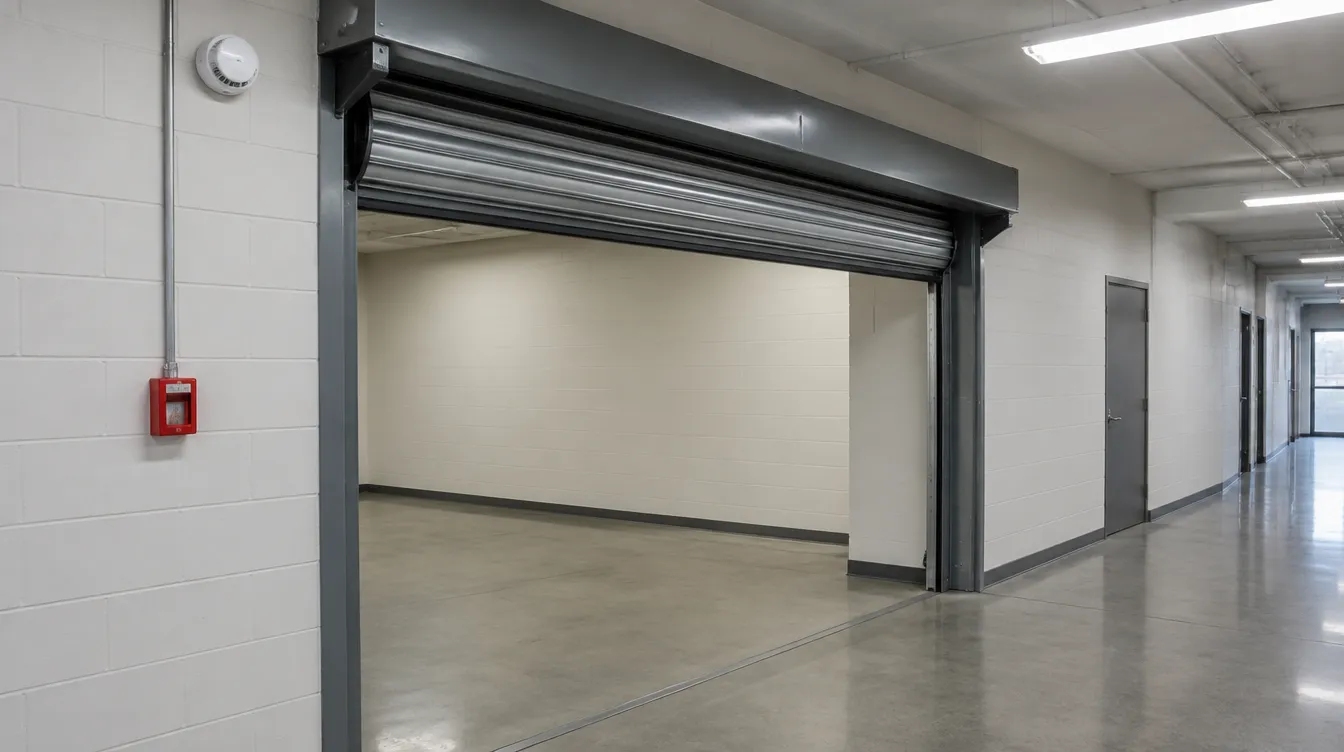

The LM21XPBB is a fire door release device from LiftMaster. It holds a rolling, sliding or inclined-track fire door open during normal use. When a smoke or heat detector trips, or the building’s fire alarm panel sends a signal, it releases the door’s fusible link so the door closes on its own.
It’s a fail-safe device, so it’s powered while it holds the door. If power and the backup battery are both lost, it releases the door rather than leaving it open.
Key specs
| Power | 120V AC, 24V AC or 24V DC |
|---|---|
| Battery backup | 12V sealed lead-acid battery, up to 72 hours of standby on the LM21XPBB |
| Release delay | 10, 20, 30 or 60 seconds, set by DIP switch |
| Detectors | Up to four smoke detectors, plus LiftMaster heat detectors as accessories |
| Alarm panel | Connects to a fire alarm control panel through a relay module |
| Signals | Separate alarm and trouble relays, and up to two horn or strobe annunciators |
| Doors | Rolling, single-slide, centre-parting and inclined-track fire doors |
| Size | About 9.7 x 7.5 x 5 inches, roughly 18 lb with batteries |
Specs from the LiftMaster LM21XPBB installation manual.
Why the delay setting matters
The delay gives people a few seconds to clear the opening before the door comes down. It’s set on the board to 10, 20, 30 or 60 seconds. The right setting depends on the space and what your fire inspector asks for.
Installation and testing
LiftMaster’s manual calls for installation to NFPA 72 and NFPA 80, the electrical code, and the rules of the local authority having jurisdiction. In practice that means coordinating with whoever looks after your fire alarm system, and testing the door drop once it’s in. LiftMaster also recommends replacing the backup battery every two years.
We install and service fire door hardware on commercial and industrial buildings across Ontario. See fire rated doors, or call us if a fire door isn’t closing the way it should.